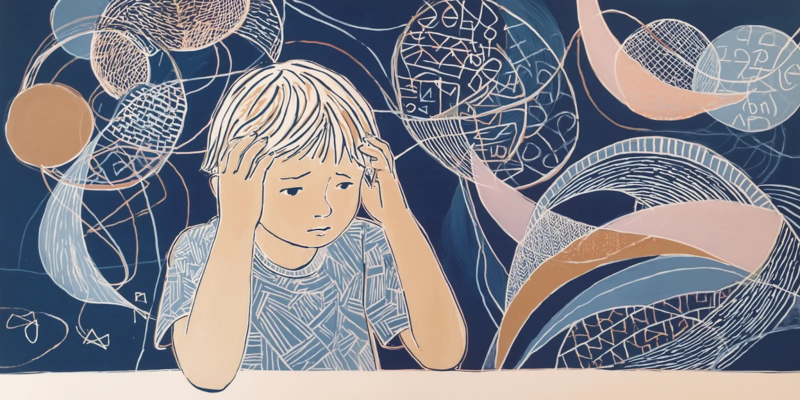
“In mathematics you don’t understand things. You just get used to them.” — John von Neumann
John von Neumann was a mathematician so brilliant that he left his mark on everything from quantum mechanics to the foundations of computing. If anyone had a claim to truly understanding mathematics, it was he.
And yet, here he was saying the exact opposite.
At first, that sounds like a humble, maybe even flippant, remark. But there’s real wisdom in it — and for parents, teachers, and learners, it offers a liberating truth:
Math isn’t about being a genius. It’s about getting used to thinking a certain way.
And anyone — anyone — can learn to do that.
Math Is a Language, Not a Score
When we think of math, we often picture worksheets, calculators, or standardized tests. But real mathematics — the kind practiced by scientists and thinkers — isn’t about memorizing formulas or crunching numbers.
It’s a language. A way of describing ideas.
In science, math is the medium we use to express the structure of the universe. It’s how we define, relate, and reason about ideas that can’t always be seen or touched.
Let’s try it. Picture a ball. Maybe it’s a soccer ball, a baseball, or a planet. Now strip away the surface details — the laces, the logos, the texture. What’s left?
A sphere.
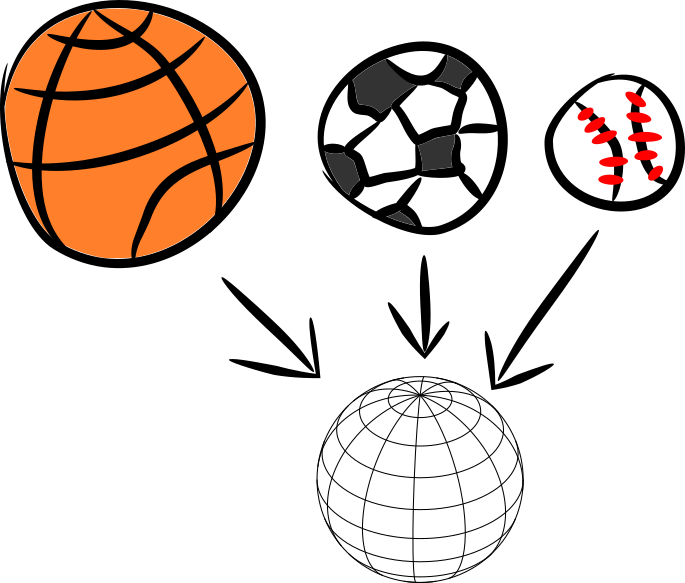
You just performed a mathematical abstraction. That’s what mathematicians do: they simplify complex things into ideal forms so they can explore their properties more clearly. A sphere doesn’t really exist in the physical world — not perfectly — but it’s an incredibly powerful idea.
Why powerful? Because once we understand spheres, we can apply that knowledge to countless real-world problems — from calculating the volume of a basketball to predicting the motion of planets.
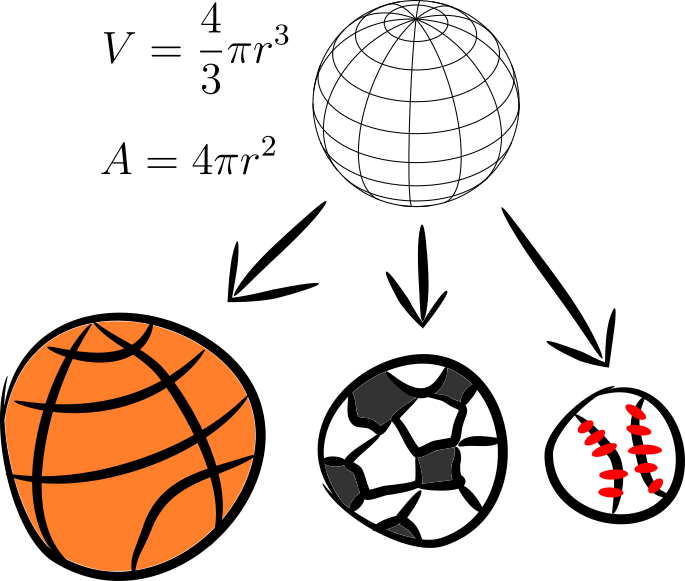
That’s the power of abstraction. And math is the tool that makes it possible.
Practice Makes (Intuitive) Perfect
There’s a popular idea in skill development called the “10,000-hour rule” — the notion that it takes about 10,000 hours of deliberate practice to become an expert in anything.
It's not exact science, but it makes a key point: deep understanding takes time.
And this doesn’t just apply to math. Musicians, for example, often say things like “I just play by feel” or “it comes naturally.” But if you peek behind the curtain, you’ll find thousands of hours of scales, drills, mistakes, and muscle memory.
The same is true for mathematicians. What looks like “intuition” is really familiarity built from long, often quiet hours of exposure and effort.
But here’s the thing — you don’t need to put in 10,000 hours to start enjoying something.
Pop Music and Pop Math
Most people enjoy music without ever picking up an instrument. Pop songs, catchy melodies, and viral hits are designed to be accessible and fun — no training required.
But those who do dig deeper — who learn an instrument, mess around with music software, or just listen more attentively — begin to hear more. They notice the patterns, the key changes, the harmonies. The more you learn, the more you appreciate.
The same is true of math.
There’s “pop math” — those delightful puzzles and paradoxes that don’t require a math degree to enjoy. Take the Monty Hall problem, for instance, which turns our intuitions upside down with a simple game-show setup. Or the Birthday Paradox, which shows how probability can defy our expectations.
Channels like Stand-Up Maths or 3Blue1Brown serve up math like a well-produced music video — entertaining, surprising, and beautifully presented.
These are the pop music of mathematics. You don’t need to “get it all” to enjoy it. But the more you lean in — the more you try things out for yourself, ask questions, or even play with a math app or puzzle — the deeper your appreciation becomes.
Where (and When) to Start
If you’re a parent wondering how to help your child “excel” at math, the first thing to ask yourself is this: What do I mean by excel?
- If you mean get high test scores, then yes — practice tests.
- But if you mean understand math deeply, then the path is less standardized.
And that’s a good thing.
You don’t need to follow a strict curriculum to develop mathematical thinking. You just need to nurture curiosity and comfort with abstraction. Here are some ways to start:
- Play puzzles and games. Sudoku, logic puzzles, or pattern-based board games all build math muscles.
- Explore math in nature. Count petals, observe symmetry, spot fractals.
- Read stories and watch videos. Stand-Up Maths or 3Blue1Brown, as mentioned above.
- Encourage questions. “Why is that pattern there?” or “What would happen if…?”
- Draw and code. Geometric sketches or simple coding projects (like Scratch or Python) are math in disguise.
- Talk about ideas. Even just sitting quietly and wondering aloud can spark connections.
Math isn’t a series of right answers — it’s a way of seeing the world.
Let Go of the Fear
Many adults carry math anxiety from their school days. It’s easy to feel like math is about speed, memorization, or being “naturally good.”
But that’s a myth.
Math isn’t about talent. It’s about time and tolerance — time spent getting used to its strange but beautiful ways of thinking, and tolerance for the discomfort of not understanding something yet.
It’s okay to struggle. It’s okay to be confused. That’s part of the process. In fact, it’s a signal that learning is happening.
In the End, It’s Not About the Test
When I’m asked how to help kids “succeed” at math, I often sense an underlying pressure. Parents want to give their children every advantage.
That’s understandable. But test scores are not the best measure of success.
Instead, aim for something deeper.
Help your child learn to think abstractly, to ask questions, to find joy in patterns, and to persist when things don’t click right away.
If they learn to think that way, the grades will probably follow. But more importantly, they’ll have a skill, or mindset, that will serve them for a lifetime.
And maybe, like von Neumann, they’ll get so used to math that it starts to feel like home.